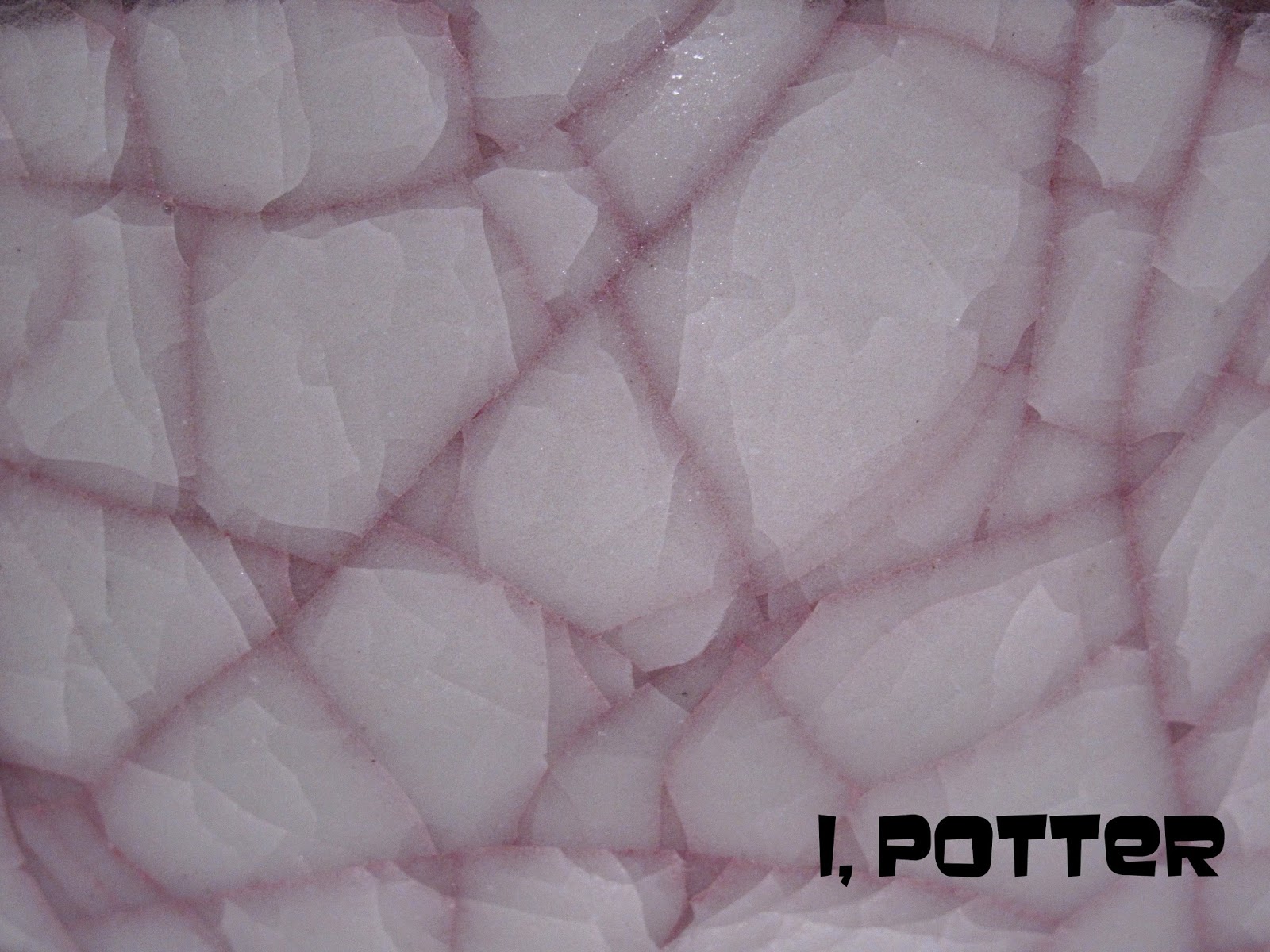
For
those of you familiar with the work of the Hornby Island potter, Wayne Ngan,
there is a lot that could be said about this potter who made his way in clay,
bronze and ink in a certain degree of solitude but he would prefer you to just
see the work. This faceted covered box form is a simple pot with a glaze that
fits the piece like a well tailored suit but it is humble, honest and
contemplative the way some really good pots are, beyond being a potter's pot,
it speaks of the potter and place where it was made. I am always fascinated by
the pottery of Ngan, some pieces are simple, even shy while others are strong
and evocative, flip sides of clay's potential which he crafts into dialogues
that speak to each and every viewer.
Friday, November 11, 2016
Wednesday, November 9, 2016
PLANS CHANGE
The
other day my wife asked me to make a new sugar bowl for the counter as the one
currently in use has been around since 1992/93 and was not made as a sugar
bowl. After thinking about it for a while and having finished what I had
intended to make for the day, I wedged up some clay and as you can see in the
illustration, plans change. I didn't go out of my way to not make a sugar bowl
and lid but rather as I was centering the clay I realized there was a bit too
much for the task at hand and decided to make a taller covered piece than was
planned. Neither planned or quite sure where they came from, out of the wedged
clay sprang these forms and lids which I later tooled and adorned with these
knobs meant to compliment the form and echo the series of four cut notches in
each foot. Once firmed up, each was slipped and combed and for a novel approach,
I think I will glaze them in my Oribe when they are bisque. Plans may change
but that doesn't alter the fact that I still need to make a lidded sugar bowl
which is actually designed for the task at hand.
"Good
luck is often with the man who doesn't include it in his plans." Wm.
Shakespeare
Monday, November 7, 2016
青磁
I
had the opportunity to handle a very fine seiji celadon chawan a short while
back and took a number of photos of the piece which I will in turn make a short
slideshow video. In the mean time, I thought to post this detail shot to show
the exquisite nature of the double refractive celadon which is further
accentuated with iron highlights mingled in to the magical fractures of the
glaze. For such a simple surface born from a somewhat complex process, seiji
glazes create an incredible universe made infinitely better when used on
exactly the right form. There is little else one can to say except more to
follow at a later date.
"Small is my theme.... yet has the sweep
of the universe." Walt Whitman
Friday, November 4, 2016
VOLUME II
Puffed
up to the point of imminent danger, this tsubo is a simple statement regarding
volume and how it can be explained and perceived. Created by traditional Mino
specialist, Ando Hidetake this wood fired Ko-Mino style tsubo has the
appearance of being inflated to the point to which the structure almost seems
impaired. The edge of the shoulder and neck have dipped into the form where the
recess has gathered a pool of the glaze creating a darkened ring which further
accentuates the tension between the pot and the volume it expresses. I have
seen a number of brilliant tsubo over time and though there are certainly pots
that are larger, rounder and fuller few capture this sense of spatial
tautness and drama in which the piece becomes synonymous with a visual mass
that appears on the brink of structural annihilation. I have seen quite a
number of pots by Ando Hidetake that are infused with an impending narrative
and drama of which this pot has in volumes as well.
Wednesday, November 2, 2016
FIERY RED
I
got a phone call from Bill Klock the other day which is always a welcome
"interruption" to a day in the studio. He is constantly on the move,
making plans and setting up travel itineraries and his calls make me want to
travel to England as he talks about his last trek there with such enthusiasm. Back
in the 90s Bill (and Anna) made their way to South Korea where Bill worked with
several potters for nearly a year and was very influenced by both the mishima
and Onggi potters which made its way in to his work when he came home.
Illustrated is a richly glazed fiery red Shino jug with impressed chrysanthemum
designs sprinkled about the surface, the type he saw on a myriad of mishima
pots while abroad. This jug was first dipped in a thin layer of the glaze and
then was dipped again at the top of the shoulder to create a nice variation on
the pot surface. I will certainly not say with absolute definity but I think
Bill used Shino, temmoku and ash glazes more than just about anything else and
given the results, I can understand why.
"The
man that can make hard things easy is the educator." Ralph Waldo Emerson
Monday, October 31, 2016
DOTAKU
Illustrated
is an angled side shot of the dotaku bell form that I posted up last week in
greenware form. I rubbed the edges just a bit to try to accentuate the sharp
lines around the pot and used the alternating rain pattern in copper to try to
animate it a bit and promote the vertical nature of the piece. The lugs
that are attached are pierced through and I first worked on this type of
attachment on pilgrim flasks for the use of a suspension cord. I like working on
pieces/parts pots, there are lots of possibilities and problem solving that go
into the building and stuff that goes right (and wrong) with unexpected
discoveries along the way which are all just part of the process.
Friday, October 28, 2016
JUST A JAR
My
first look at this wonderful little chaire was without the ivory lid
which is synonomous with this form and I was immediately struck that it looked just like
its much larger counterpart, the ubiquitous tsubo. I have seen quite a few
tsubo of all sizes by Osako Mikio and though diminutive in scale this form fits
well in to his body of jar forms despite this one being a chaire, but afterall,
isn't a chaire just a jar (ko-tsubo) for powdered matcha? Forms that transcend
size fascinate me and this little gem is only one of a handful of chaire I have
seen by this potter and it has every characteristic of Osako's work that one
would expect from wood fired effects of ash and color variations to the rolled
lip terminating the form and a bright ash green accent about the mouth and
shoulder running down the pot. The way in which the piece was thrown would seem
contrary to this particular form but Osako Mikio manges the clay in a rather
casual and natural manner as he is well known to do and his experience brings
this Tokoname chaire to life. Though small in scale there is a lot to consider
and enjoy from this miniature tsubo all decked out and ready for the tea ceremony.
Monday, October 24, 2016
T&A IV
I
clearly remember the first time I saw someone seriously alter a thrown pot, it
was during a Ron Meyers demo in which he threw a soft and casual cylinder and
just picked it right off the wheel head and pushed it oval to form the basis of
an oval baker form. I had only been making pots for less than a year when I saw
this and what it immediately instilled in me was that almost (!) anything is
possible with clay. I have seen the spectrum from magnificent trompe l'oeil to
the abstract sculpture of Volkos and just a bit of everything in between and I
am always impressed at what clay is capable of; infinite artists, infinite
possibilities. After seeing Meyers work, I set about trying to figure out how
this approach applied to me and what I see in my head and started making simple
oval bakers, squared forms and other thrown and altered pieces and after a trip
to Nara I became exceptionally interested in Japanese bells, dotaku.
Over
the years I have made a wide array of t&a forms based on dotaku with the
most interesting and creative to make are the one that are thrown, altered, cut
and reassembled to create crisp lines, ribs and other accentuated high points
such as the one in the illustration. This bell form was glazed in my ame-yu
with copper accents creating an alternating rain pattern on each concave level
and is finished off with impressed lugs and a neck and mouth which mimics the
form. When I look at these forms it is almost inconceivable that the genesis
was a Ron Meyers demo but the seed was planted, took hold and came out as
something that is easily associated with who I am and how I work, I don't think
I could really ask for more.
Friday, October 21, 2016
REPEAT OFFENDER
I
received an email the other day in which I was jokingly refered to as a
"repeat offender" in that I tend to post/write about wood fired pots
and Tsukigata way too often to which I retorted, it's my blog and I'll post
what I want to. I have received emails like this before and it is absolutely
true, wood fired pots get a lot of attention, I am mostly putting up pieces
that speak to me and that I am affected by pots by Furutani Michio, Kojima
Kenji, Tsukigata Nahiko, Kumano Kuroemon and others who always manage to get my
mind reeling. To switch things up, ever so slightly I choose this wonderful
Kawai Kanjiro henko that I have had in my pictures file for quite some time. I
am particularly drawn to the stoic and purposeful form but it is the excellent
articulation of the design and borders in underglaze iron, copper red and gosu
blue on the gohonde style backdrop that makes this piece so eloquently
conversant and immediately grabs my attention. I have seen a number of Kawai
henko very similar but the background with a subtle mix of greys, lavenders and
creamy tans make for a rather striking surface in which the canvas is almost as
pleasing as the painted design. Even though there hasn't been a traditionally
wood fired piece up in several weeks, I hope this takes a small step to a more
thoughtful balance of styles and traditions.
Wednesday, October 19, 2016
FILLED TO THE BRIM
I
am always looking for creative ways to fill the kiln to absolute capacity and
after throwing the bulk of bigger pieces I set about making things other than
the usual yunomi and teabowls. For this firing I made a number of tall, slender
chaire style covered pieces with spire knobs as well as some western style tea
caddies and a few Japanese style candlesticks. The three Oribe hakeme chaire in
this slideshow video measure just about five inches tall with their lids and
were fired on pins, you can see the tell tale marks from the pin tripods on the
bottom of each piece. All three were fired without their lids on giving the
mouth a nice glazed finish and only the very bottom of the lid ring is free of
glaze. It is nice to expand the possibilities for packing the kiln and these
recent tea caddies are great for quirky and hard to fill spaces between a bunch
of round, squared and oval stuff.
Subscribe to:
Posts (Atom)